Site Meter

Thursday, November 17, 2005

Vani girls

I was shocked when I read this..


The girls have pleaded that during their infancy/childhood they were given in
Nikah (verbally) in a compromise in a dispute over a murder and now they are
getting education while their so-called spouses have turned out to be illiterate
and vagabonds. On their (girls) refusal to be married two of their brothers were
shot and injured and were admitted to the DHQ Hospital by their spouses only a
few days back.


According to Amnesty this is not a unique case:

In March 2004, a case was brought in front of a judge in Dadu, Sindh province,
regarding the sale of Akthiar, a 7-year-old girl to a 35-year-old man for
marriage. The girl’s mother appeared with her in court to protest the sale of
her daughter, by her husband to Ali Hassan, a resident of Mazdoorabad Moholla in
Dadu for Rs. 18,000 (300 USD). Akthiar managed to escape. Since then Ali Hassan
has attempted to kidnap her back, and her mother is seeking protection for her
daughter. An investigation into the incident was called for by the judge.


Khaleej Times also published an article on the same topic.

There are no reliable statistics for how many girls are given away in swara
or vani every year in Pakistan. Rights activists say most cases go unreported in
the conservative tribal communities.

"The victim of such practices is voiceless and helpless because the two
parties involved in the deal are too powerful to be challenged...by the girl,"
said Khattack.

"They get away with it because there is local communal consensus," he said,
and called for joint efforts by the government and civil society to stop the
practice.


Cricket and Religion

So Pakistan beat England yesterday in a closely fought game. Whats very interesting is the change thats happening within the Pakistan team these days. From Inzamam's ( Pakistan Cricket team captain) Bismillahs before the post match interviews to all the beards popping up on the players' faces.

Here is an article which gives more details about the cricket team and how the role of Islam is growing within the team....

"The growing influence of Islamic teachings on the Pakistani cricketers is becoming more apparent day by day.

And it’s a big shift in the habits of the team members from the last few decades when the Pakistani players - besides their cricketing prowess - were also well known for their appetite for a good life.

But things and the atmosphere in the team have dramatically changed now and it is a regular feature now to see the players praying together or some religious personality coming over to deliver a sermon on the teachings of Islam and the tenants to being a good Muslim.

On Thursday it was the turn of former pop star Junaid Jamshed to drop in a deliver a sermon to the players and it was an interesting experience to see the players huddled together in one room listening intently to the sermon in which emphasis was laid on saying your prayers regularly.

It is also now a common feature for most of the players to invite you to say prayers bajaamat (in a group) with them if they happen to meet you in the team hotel. From the born-again-Muslim Mushtaq Ahmed to the 20-year-old Salman Butt they are keen to have you join them.

Even the liaison officer of the team, Mazhar Alam was seen roaming around on Thursday in an Islamic cap and white shalwar kameez in the style usually worn by preachers.

Captain Inzamam-ul-Haq and Mushtaq Ahmed are said to be the ones who are now setting the trend in the team for the other players to becoming practising Muslims.

The presence of a foreign coach, physiotherapist and trainer and a Hindu player (Danish Kaneria) in the team makes the team’s atmosphere all the more interesting.

"I don’t face any problems practicing my religion. We get along well I like to listen to if something good is being said to us as a team and there is no bar on me to do what I want," he said.

The only Christian player in the side - Yousuf Youhana - recently converted to Islam and has now taken the name of Mohammad Yousuf.

Another player said while there was a lot of emphasis on religious practice and teachings in the team but players were not barred from watching TV or listening to music or just enjoying themselves. "But obviously when you are in an atmosphere where there is so much emphasis on religion and prayers one does start to get influenced to change his ways."

Even before the start of the England series Inzamam had led a group of players to Raiwand to have a pep talk with the Tableeghi Jamaat head. "

I wonder if this trend is a reflection of the Pakistani society???

Monday, November 14, 2005

The Aunty Network

I am sure some of the people reading this have heard of the famous Aunty Network that exists within the South Asian community ( don't know about other cultures). When I came to Waterloo from Islamabad I thought with leaving South Asia I had said goodbye to the Aunty Network as well...However it was not long before I discovered that the Aunty Network is indeed Global and is alive and kicking even in Canada!

Figure 1 illustrates how each Aunty ( Note : In South Asia someone you call Aunty does not have to be related to you) is connected to other Auntys. As you can see the Network is extensive and it would be very hard to model each interaction that takes place inside the Aunty network. If you take the connecting lines as flow of information you can see that the source of any information is too hard to establish.....The connecting lines between the auntys have not been drawn to scale and can range across the globe. The Uncles do not come into the diagram however in some cases they may have a limited role. The Uncle network is almost non-existent when you compare it to the Aunty Network.

Figure 2 shows how facts can easily become fiction once they are processed in the Aunty Network which is not a surprise given the amount of information that each Aunty is handling.

Figure 3 illustrates the power of the Aunty network to hook up any random guy to a random girl once they are processed through the Aunty Network. What happens within the Network will require another post from me ........... :-)

The Aunty Network is strong.......

The Principal Imams and Their Schools


Description

This lecture series examines the formation of Islam's four major Sunni schools of law, while touching on the three principal Shi'a schools. Its primary focus is on the distinctive methodologies of each tradition, since many of the crucial differences between schools rested in such differences. The concept of sunna, for example, was invoked by all schools, but each held distinct views on what constituted its content and how it was to be applied. The series highlights relevant issues in academic studies relevant to Islamic law. To what extent did the formation of legal schools reflect the civil strife of Islam's early centuries? Were the schools essentially guilds? The legacy of the principal Imams continues to be of importance to Muslims throughout the world. What role ought this heritage play in our community today? The Principal Imams and Their Schools seeks to provide basic information and some fundamental considerations, historical and otherwise, which are essential to finding authentic and meaningful answers.

Sunday, November 13, 2005

Waterloo Student Killed ( follow up post)

The U of Waterloo website reported the death and CTV hs some more details on it

"Police say they suspect wolves are responsible for the death of an Ontario
student whose mauled body was discovered in northern Saskatchewan.
RCMP spokeswoman Heather Russell said the 22-year-old man, from Oshawa, died
Tuesday evening while out walking in woods near a mining camp in Saskatoon.

"Our understanding is he said he was going out for a walk and said he would
be back around 5 o'clock," she told Durham Region News.
When the man failed to return, other workers in the camp went to look for him.

"His body was found around 7 o'clock," Russell said.
If it's confirmed that the death was the result of a wolf attack, it would be the first one in recent history in North America.........."

Friday, November 11, 2005

Waterloo Student Killed

Sad news.

A Waterloo Geological Engineering student was 'likely' killed by wolves in Saskatchewan while on his co-op term there. No news from the University yet but CBC is already reporting this( The CBC does not know it was a University of Waterloo Student) News is spreading fast and most of my class knows about this since the Geo Eng is close to our department and word spreads around fast.

This life is short. ....

Quake 6 : Updates

I was going through Pakistan's main Newspaper's website and found most of the paper consumed by the quake....yeah it it still is really bad. Even now when I talk to my parents we ussually end up talking about the quake. Of course one reason is because there are about 15,000 refugees in Islamabad and my Mom actually visits them whenever she gets a chance. She really has sad stories to tell. The other day she told me about several kids who had had their arms or legs amputated and worse yet they have either lost one or both of their parents. Its tough to imagine being a 7 year old without a leg or a arm and with no parents. :-(


But this scenario is true for thousands which makes me very sad. The challenges are many, I have listed a few below with links to news items about these:

Wednesday, November 09, 2005

Chemical Weapons found in Iraq?


So they did find Chemical weapons in Iraq! However they were the ones used by the US army in Fallujah in what appears to have been an indiscriminate massacre. I just saw this documentary ( real / wmv / asx ) and yeah it was quite disappointing. And the contradictions are quite obvious and appalling.

Whats more most US media is not giving this much coverage and the headline just disappeared from BBC ( from both their Front page and Middle East sections) in 1 day ( unlike very other headlines)!

The Christian Science Monitor has a really good article on this issue and Sunnisister has a good post on this issue as well.

How the Globe ranked UW

From the Waterloo Website:

How the Globe ranked UWWaterloo has an A-plus academic reputation, and lots of high marks on other criteria, according to the "University Report Card" published this week by the Globe and Mail.
The grades are based on comments by students who are "members of the studentawards.com database", the Globe said. Students gave rankings to their own universities for technology, food, community spirit and other topics. The paper said 26,000 students nationwide took part in the survey, but didn't say how many were from any one university.
The "Report Card" also included articles elaborating on each major area, with a lead story on "e-classrooms" and texts about online library resources, tuition costs, residences and so on.
UW was ranked with other "medium" universities with an enrolment between 12,500 and 25,000. Here are the marks the Globe gave Waterloo:

Education overall
A
Teaching quality
B+
Class sizes
B+
Faculty-student interaction
B
Faculty availability outside classroom hours
A-
Student residences
B
Off-campus housing availability
B
Off-campus housing affordability
C+
Technology overall
A-
On-line library resources
A-
On-line teaching materials
A-
Classroom technology
B+
Reputation among employers
A+
Academic reputation
A+
Finance
C-
Student services overall
B+
Health services
B+
Food services
C+
Recreation and sports
B+
Atmosphere overall
B+
Extra-curricular activities
B+
Sense of community
B-
Attractiveness of campus
C+
Waterloo scored "top marks" among the universities in 24 of 67 sub-categories, according to an analysis by the marketing and undergraduate and recruitment office.

Say it again: UW is 'best overall'

From the Daily Buliten
Say it again: UW is 'best overall'. Waterloo has held onto its position as the
number one "comprehensive university" in Canada, as well as its number one "best
overall" ranking by reputation in the nation, in Maclean's magazine's annual universities issue. The magazine will hit newsstands across Canada later today.
UW has been "best overall" in Canada in the reputational rankings for 14 of the 15 years Maclean's has offered that title. Waterloo was also named "most innovative" in the national reputation survey, and swept all the reputation categories -- No. 1 Highest Quality, No. 1 Leaders of Tomorrow, No. 1 Most Innovative, and No. 1 Best
Overall -- among comprehensive universities (those with a broad range of
undergraduate and graduate programs, but without a medical school).
Coverage
in Globe
and Mail
London
Free Press

Reaction from Laurier Toronto McGill "The University of
Waterloo community is very pleased with this wonderful news," said president
David Johnston. "This is testimony to our people -- our students, faculty, staff
and alumni around the world. We couldn't be more proud of them." In a news release
issued yesterday afternoon after universities got a preview of the Maclean's
issue, Johnston said the rankings reflect "a team approach at Waterloo that
involves thousands of talented and committed people on several campuses and
connected coast to coast and also around the globe."
Provost Amit Chakma
said the rankings "reinforce the university's strategy of recruiting and
admitting the highest quality students -- undergraduate and graduate -- and
recruiting splendid faculty members to bring top-quality education to our
students, in the classroom and the lab." He added: "Waterloo has been working
very hard the last few years as a university to add even more high-quality
individuals to our already strong faculty ranks, bringing in bright young
professors who are leaders in their areas of research. If you bring the very
best they become a magnet and draw others with similar aspirations, including
very accomplished students and staff."
On the way to topping the magazine's
list of 11 comprehensive universities, UW scored high in several individual
categories, placing first in six of them: student retention, student awards,
classes taught by tenured faculty, awards per full-time faculty, and alumni
support, as well as the reputation survey.
The reputation rankings --
traditionally UW's biggest boast -- are arrived at by surveying thousands of
people across Canada, including high school guidance counselors and principals
from every province and territory, chief executive officers and recruiters of
companies, heads of organizations and university officials.
Among the
comprehensive universities, Victoria is listed second behind UW, with Guelph and
Simon Fraser tied for third. McGill and Toronto are tied as the top
"medical-doctoral" university in the country, and St. Francis Xavier is the top
"primarily undergraduate" university for the fourth year in a row.

Saturday, November 05, 2005

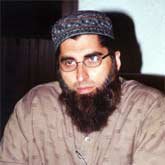
Junaid Jamshed and his change


Growing up in Pakistan, Junaid Jamshed was a big household name everywhere--as well as an icon for the youth. He was one of the pioneers of Pop Music in Pakistan with his band Vital Signs. However a couple of years ago Junaid did a complete U turn and turned really religious. He has been regularly going for Tabligh with Tableegi Jammat. And yes he does look much different now with his beard and cap. My last visit to Pakistan revealed that he has making trips to elite Educational institutions in Pakistan talking about his personal change and religion in general. Of course some people in Pk just dismiss anyone with a beard without even listening, but I have heard, that he has had an impact on the young people in Pakistan.

For me it was a shock cause yes I was a fan of the ol' Junaid's music. However I was so happy when learnt that he has decided on singing Naats. And alas his first naat album is out. It is quite the album with naats like Jalwa-e-Janan based on the Burda and other amazin' Naats.

I would have never thought that Junaid could have changed so much. I guess in this lies a lesson for religious people , who are quick to condemn anyone ( and really bad communicating with them) who they perceive as less religious or knowledgeable then them and on the wrong path. As I have heard a top scholar says that our problems not only lie in people not turning to religon , it also lies in the arrogance of the religious.

I sometimes try to go to the sunnah and see how the Prophet ( Peace be upon him) dealt with people less religious ! I end by giving the example from the seerah of the man Urinating in the masjid?

The Bedouin man who came into the mosque and urinated in the corner. A group of the Sahaba became angry and started yelling at him. The Messenger of Allah (sallalahu aleyhi wa salaam), however, said, "“Do not interrupt him; leave him alone."” When the Bedu had finished, the Prophet (peace be upon him) spoke to him, teaching him that in the mosque, it was not proper to do these things. Then he told one of the Companions to bring a bucket of water and pour it over the place where the Bedu had urinated.


Friday, November 04, 2005

Monday, October 31, 2005

Yearkbook Blurb


Waterloo Brainwashing? Picture from 2nd year in the Water Quality Lab.
(used for our yearbook:-)).


QUOTE : We should not do as we like; but we should like what we should do.
( by Abdul Hakim Murad)

Water Water Water loo loo loo...

These words always bring back memories of our Frosh Week in 2001. It is hard to believe that more than 4 years have passed since that week when I thought university was going to be a piece of cake after high school. Of course a week after Frosh Week, the bubble burst. I, like many others , was brought down to earth by the challenges of adjusting to 1st year—from studies to roommates to co-op. I also had the personal challenge of adjusting to a new culture which my family had abandoned when I was only 2. However, thanks to people who supported me, I adapted within a couple of years. Friends like Leigh, Mustafa, Arshad and Junaid are among the most awesome friends I have ever made. My Enviro classmates and Geo buddies have been and are a great pillar of support. And how can I forget that overly friendly and funny professor who helped us so much in 1st year-Bob! The list of people that I can thank is endless!

As time passed by I also fell in love with my Program and in particular with Water. When people ask me what kind of job i want to pursue after graduation, I usually respond, "ideally, I will be cleaning water!" So my cheer as i approach graduation has been reduced to:

Water Water Water…[Silence]

Sunday, October 30, 2005

Wednesday, October 26, 2005

The MSA Nursery Rhyme

dedicated to all the MSA -Waterloo people ( past and present) who read this blog.

Stay clear, The sisters are here
Whisperring something, I cannot hear
Hope is here, when brothers volunteer
they are working out, have no fear

The wind is blowing
the hijabs are glowing
the water is flowing
the beards are growing

BIg brothers in the MSA
Brothers from back in the day
Hair falling off ; Hair turning grey
Time for them to get married I'd say

Brothers with torn socks
Sisters with new clocks
Speakers giving islamic talks
The president being pelted with rocks

Be it rain, shine, snow or hail
The MSA ship will not go stale
With amazing people like these
We can cross the Oceans with ease

Monday, October 24, 2005

Beauty Tips...

From one of my favourite blogs : SOMEwisdom
Beauty Tips...

For attractive lips,speak words of kindness...

For lovely eyes,seek out the good in people...

For a slim figure,share your food with the hungry...

For beautiful hair,let a child run his or herfingers through it once a day...

For poise,walk with the knowledge you'll never walk alone...

People, even more than things, have to be restored,renewed, revived, reclaimed, and redeemed;never throw out anybody...

Remember, if you ever need a helping hand,you'll find one at the end of your arm...As you grow older, you will discoverthat you have two hands,one for helping yourself,the other for helping others...

The beauty of a woman is not inthe clothes she wears,the figure that she carries,or the way she combs her hair...

The beauty of a woman must be seen from in her eyes,because that is the doorway to her heart,the place where love resides...

The beauty of a woman is not in a facial mole,But true beauty in a woman is reflected in her soul.It is the caring that she lovingly gives,the passion that she shows,

And the beauty of a woman with passing years only grows!!!

Saturday, October 22, 2005

Quake 5: The Valley of Death

Article from the Globe and Mail:


UWAN, PAKISTAN — In a hail of flying rocks, while the earth broke and fell hundreds of metres into the valley below, Sabir Hussain Shah took a giant leap.

The 40-year-old threw himself across a freshly opened crevice to save his children as they screamed on a mountain ledge during the earthquake that ravaged this remote part of Pakistan two weeks ago today.

Now, Mr. Shah is preparing for a leap that frightens him vastly more. As a leader in the village of Suwan, Pakistan, and a great-great-grandson of the warlord who founded the remote settlement almost two centuries ago, Mr. Shah is trying to persuade his neighbours to abandon this place.

“There is no life here any more,” Mr. Shah said, standing on a footpath overlooking the ruined houses and cornfields on carved shelves in the mountains.

The landslides and collapsing homes killed 24 of Suwan's 700 villagers.

In the first days, the survivors didn't have a moment to think about anything except digging for bodies, building shelters, and foraging for buried food. They clawed at the mud with their bare hands and slept in the rain.

Now, the men who poke through the rubble for useful items have slowed their work. The ones who push boulders off the narrow paths are leaning idly on their tools. Everybody squats among splintered beams and shattered rocks, talking quietly and seriously.

They love their village, with its rich soil and pure water from nearby glaciers. But there is little of what they used to call home left: The landslides washed away 90 per cent of the homes, 60 per cent of the livestock, and most of the stores of food. Their tools are buried and their water pipes broken................................................

Quake 4: The Aftermath


ASSOCIATED PRESS PHOTOGRAPHS - Sat 22 Oct, 01:16 PM
A Kashmiri earthquake survivor, made homeless by the Oct. 8 earth quake,
sleeps in debris in a street in the devastated city of Muzaffarabad, Pakistan


Just talked to my parents today. Again, the Earthquake was mainly what we talked about. Eid preparations have been toned down this year. A lot of people are still recovering from the psycological impact that the quake has had. However these peopple are still lucky becuase there are others who are dealing with much worse like the loss of families, homes, cities, neighbors, roads, trade, etc. I sent my parents the eyewitness account that I had posted on my blog. My parents thought it was just baloney. Although, there is no smoke without fire my dad said that the eyewitness account was full of exagurations. The fact that the author of the article is anymonos also reaises doubts about the credibilty of the article.

The UN is painting a bleak picture and Jan England ( UN emergency relief chief) commented on the Aid sent so far:

"This is not enough. We have never had this kind of logistical nightmare ever. We thought the tsunami was the worst we could get. This is worse."


An eye witness account of a journalist was also very moving:

"...............Stench from the dead, both humans and animals, became unbearable as we approached Bagh City. Destruction was widespread and civil life was totally paralysed. Poor and the privileged suffered equally. Such calamities have an eerie egalitarian character in terms of their unfortunate consequences. Like elsewhere in Azad Kashmir, children's casualties were staggering. Many hundreds, reportedly, lay dead under the rubble of one Springfield School in Bagh City. I saw one unrecognisable corpse being recovered. On October 14, six days after the earthquake, debris was being removed with bare hands.

Relief activity was taking place chaotically. In many instances people just threw relief goods on the roadside as they got stuck in traffic jams. Residents of Bagh valley had much better access to what was coming while those in the mountains got nothing or a trickle. Out of the massive relief goods that were arriving in Bagh, as a fair guess, at best one fourth was reaching where it was required.

The local army commander told me that people had suffered comparatively more on the heights. Helicopter support, tenuously dependant on fair weather, was desperately trying to keep their lifeline open. Army mule trains were also augmenting this effort. A Spanish medical team was briskly at work next to the helipad. I was told that an Army Division was being deployed to gear up relief work. The Army was taking control of the situation as on my way back I saw troops deployed for protection along main routes and the Military Police was attempting to facilitate the traffic flow.

Following the Bagh experience, it is recommended that within the disaster zone relief goods should be handed over to the Army authorities or to other agencies that have both the information and the capacity of sending them where they are most needed. Secondly, relief activity at any scale requires sound organisation in ensuring what is sent is consistent with the needs at the destination; that it is delivered with 100 percent surety; and that stern accountability ensures its correct end usage.

It was after visiting Bagh city and its adjoining areas that I sensed the scale and scope of the calamity. While I have made a mention of the visible damage, what could not be seen was even more disturbing. The local population seemed gripped by fear and terror. There was no safe shelter to sleep; water was being used from polluted sources. No functioning hotel and market catered for the basic needs. There was not even a safe mosque, the ultimate refuge, to pray from.

Those who could were fleeing the city. Most, however, had no option but to stay. Disillusionment had robbed many of the will to fight. One grandmother who had lost two of her grand children echoed such sentiments. Children were rarely to be seen. Those visible wore grim expressions. Break down in family structures had made the infirm more vulnerable. A young girl who required major foot surgery was being physically carried by some distant relatives as her father and brother had died. Medical treatment that she needed was not to be found short of Islamabad.

However, nobility in human spirit was to be found among the victims. Here I would like to make a mention of one person whom I saw standing very dignified while relief goods were being distributed in Batal area amid the familiar clamouring. On inquiry I found out that his name is Sarfraz and that eight members of his immediate family had died in the earthquake. While he admitted that he did not have much to live for, he still maintained his self-respect. Sarfraz typifies the steely resilience of countless who are learning to suffer in silence.'

Tuesday, October 18, 2005

Rain Quote

Some people walk in the rain; Others just get wet

Friday, October 14, 2005

Quake 2

The news from my parents in Pakistan is that my Mom's school ( yeah she teaches :-)) is closed since the Administration want to check cracks which have appeared in the building. Same goes for most other buildings. Had the Earthquake been a tad stronger; Allah knows what sort of devastation would have been unleashed on even more cities. As it is , the situation still seems bad. The relief effort has gained pace but has lots of problems. There are areas which still haven't been reached yet. Of course some of these areas were hard to reach even before the quake.

I remember my brother went on a Field Trip 7/8 years ago to the Northern Areas in Pakistan and he had to shave his head just just because the village he was going to only had people with shaved heads and any outsider with hair would not be that welcomed! So that just shows how cut off those Northern areas are from the rest of Pakistan and even if aid reaches them how hard it would be to communicate, etc etc.

The PSA ( Pakistani Students' Association) raised about $2500 through On campus fundraising this week which was great for a relatively new organization on our campus. I am hoping that the MSA is able to match PSA's efforts and work in tandem with them . Though it seems that last week was the best time to raise money ( with all the media coverage) and any effort now would find it hard to match itself to what the PSA did.

Meanwhile there are many more heartbreaking stories coming in.

Wednesday, October 12, 2005

Aid experts debunk post-disaster myths

From Reuters

LONDON (AlertNet) - In the aftermath of a sudden disaster, aid workers say the media often perpetuates certain myths and misconceptions about survivors and the best way to help them. Here are some of the myths that seasoned relief agencies want to debunk.

MYTH: Disaster-hit people are too dazed and shocked to take responsibility for helping themselves and others.
Reporters and photographers often portray survivors of a sudden disaster as helpless victims, unable to save themselves or each other. But according to the 2004 World Disasters Report, published by the International Federation of Red cross and Red Crescent Societies, in-depth reports from sudden disasters ranging from earthquakes to the collapse of New York’s twin towers show survivors rushing to save people from under the rubble – with their bare hands if necessary. Adeel Jafferi, media officer for Islamic Relief, described such proactivity in the immediate aftermath of Pakistan’s earthquake in October 2005: “Pakistan has never suffered an earthquake of this magnitude,” he told AlertNet in a telephone interview. “On the day it happened, ordinary people were rushing to aid victims, despite the shock they felt themselves. I saw people on the street who were completely out of their minds with fear, and yet when they saw the need to help people and heard the screams from under buildings, they ran immediately and started helping.’’

MYTH: The best international response is to send in rescue teams immediately.
Not necessarily. Some experts say local teams are better placed to perform emergency relief operations in the first few hours after a disaster. Ibrahim Oxman, the director of the policy and relations division at the International Federation of Red Cross and Red Crescent Societies, says: “The knowledge and resilience of people at risk contributes far more to reducing the toll of disasters than many of us in the developed world may expect.” During Iran’s 2003 Bam earthquake, which destroyed 85 per cent of the city, local Iranian Red Crescent rescue teams were deployed within minutes, despite losing four team members and their headquarters in the earthquake. They saved 157 lives with just 10 dogs. In contrast, international search and rescue teams from 27 countries took up to two days to arrive. Although they were armed with sniffer dogs and remote sensing equipment, they saved just 22 lives. Aid agencies are usually under huge pressure to be seen to respond quickly. But there can be serious pitfalls associated with rushing in too fast. Donna Eberwine, the editor of Perspectives in Health, says: “A hasty response that is not based on a needs evaluation can contribute to the chaos. It is better to wait until genuine needs have been assessed. The local population almost always covers immediate life-saving needs.” According to the World Disasters Report 2004, it is essential for agencies to carry out in-depth interviews with affected people to find out their needs, even in situations where time is of the essence. If they don’t, they run the risk of sending the wrong type of help. Immediately after the Asian tsunami, for example, surgeons from all over the world poured into Banda Aceh in Indonesia. But they found that few survivors had been injured, and there was little for them to do. In contrast many aid agencies overlooked women’s needs. There was a severe shortage of midwives and basics including sanitary protection, the contraceptive pill and headscarves for Muslim women were not provided.

MYTH: Dead bodies should be buried quickly to avoid disease
The World Health Organisation is one of several agencies trying to end confusion over this particular myth. Immediately after a disaster local authorities and aid workers sometimes panic and bury people before they have been identified, fearing the decomposing bodies will spread disease. Arturo Pesigan, head of WHO's Emergency and Humanitarian Action in the Western Pacific, says dead bodies actually pose little risk. “Survivors, not the dead, are more likely to be the source of disease outbreaks,” he says, adding that “identification of the body and the normal process of grieving are essential” to help survivors recover from their personal losses. John Tulloch, a coordinator in New Delhi with the South Asia regional delegation of the International Federation of Red Cross and Red Crescent Societies, said immediately after the Pakistan earthquake: “It’s a disaster myth that dead bodies spread disease. Most bugs die within hours of the host, and it was one of the big tsunami myths. We saw especially in Aceh (in Indonesia) mass burials which caused enormous problems. It’s dreadfully traumatic for relatives because their bodies end up being dug up again.” The Pan American Health Organization also says mass burials should be avoided at all costs. It calls them “a violation of the human rights of the surviving family members”.

MYTH: Survivors have lost everything except the clothes they stand up in. The best response is to give them second-hand clothes.
After the Asian tsunami, Indians sent a mountain of clothing to survivors in southern India. But the fisher families, for whom the clothes were intended, refused to accept them. Although they are usually depicted as the poorest of the poor, the 2005 World Disasters Report says they are a relatively prosperous and proud community. Even in such dire circumstances, they would not accept second-hand clothes. The unwanted clothes were dumped on roadsides, and municipal workers had to be diverted from the relief effort to gather them up. They also proved a hazard to local livestock, which tried to eat them. And food was sent from overseas. But the shipments included wheat and cooked foods from outside the region, neither of which were suitable to local tastes and which became a health hazard when they were dumped. Ebrahim Mohamed, head of British relief agency Muslim Aid, said after the Pakistan earthquake in October 2005: “We’ve been getting all sorts of offers of used clothing, and food. We tell people very nicely that getting this there is very costly. Money is the best way of getting this across. And it helps local economies.’’

MYTH: The best way Westerners can help children who have been orphaned in a disaster is to adopt them.
In most cases, children’s extended families, friends and neighbours will take them in. Unicef reported that almost all the 10,000 children orphaned in the Asian tsunami had been adopted locally within two months. By late February only 60 children were left without foster parents.

MYTH: The best way to help survivors is to put them in temporary settlements.
Aid professionals say this should be avoided as much as possible. Donna Eberwine, the editor of Perspectives in Health, says: ‘’It should be the last alternative. Funds may be better spent on building materials, tools and other construction-related support in the affected country.” The Asian tsunami showed how most survivors found shelter with host families, rather than being dependent on aid camps.

Tuesday, October 11, 2005

Imagine


Imagine your on the 8th floor of a building which falls down. You lose your arm and leg. Worse yet your Husband and kid are missing. On top of that your house is gone too. This has happened to my mom's friend.

Imagine you go to work and return to find your wife and kids dead and your home gone.

Imagine of being away from your home and finding out that now three is no family, home or city to return to. Your neighbors are dead too and so is all your immediate family. On top of that the road that goes to your city basically does not exist anymore and three is no way to even reach your city.

Imagine what it would be like to leave your kid at school just like any other day . The school falls down with the quake and your kid dies with it.

Imagine surviving everything yet you find out that your whole family is dead. Moreover you have no food and are suffering from various injuries and there is no food or shelter available and no help in sight.


Imagine being dead.

Please help the people affected.

Saturday, October 08, 2005

Quake /\/~~\/\

Collapsed Margalla Towers in Islamabad ( NY times picture)

This morning I had a big scare. I had just kept my fast when I got a message from a friend informing me of a big earthquake in Islamabad and that 2 buildings ( Margalla Towers) minutes away from my house ( where my parents live) had collapsed. Understandably I was very nervous. Frantic calls to Pakistan were not getting through, however thankfully I called my sister in Germany who had talked to my parents and later I was able to talk to my parents myself. They told me that the shaking was so violent that they could not stand up and sat down.....They thought that " this was it" as in "the end"- and the house was going to collapse. Thanks to Allah that nothing happened and my parents are okay, so is my house and all utilities are working. Though the aftershocks are continuing and even when I was talking to my mom she told me that she could feel the earth moving every few minutes.

A bit more about the building that collapsed in Islamabad. Margalla Towers were constructed right before my eyes about a decade ago. In fact the buildings that collapsed were the newest ones built!!Moreover there are buildings around that building that are taller and were built afterwards yet they did not collapse. I cant help but suspect sub standard construction was at fault. Though I guess right now saving lives is the top priority-and rightly so; but in the long term the collapse of the building has to be investigated specially in the context of the construction procedures.

What's a bit freaky for me was the fact that these buildings were built from scratch right before me, I could see these buildings from my house and these buildings so tall and magnificent.... are there no more. Some people in these buildings are no more. The people that survived the building collapse either have no home or have lost a family member.

Even though I am so far away from the quake--the fact that it has affected the city I grew up has had a big impact on me. I am thankful firstly that my parents are okay and secondly that my house is standing. Thirdly it was a reminder how near death could be for me and my dear ones.................Last but not least I pray that Allah grants patience to all those who have been severely affected and tested through this quake. I pray for those who died--May Allah grant them Paradise and may Allah grant their relatives patience as well. Ameen.

To end this post here are a few eyewitness accounts on BBC caught my eye as well:

I live opposite the collapsed apartment building in Islamabad and saw it collapse like one of those staged demolitions you see on TV. The reality of the situation hasn't fully sunk in yet. The human tragedy angle to this story is immense and indeterminable at the moment. It seems so surreal like I am still watching the telly and can switch to a different channel, one that is more agreeable and pleasant. One that won't make me realize that I am now homeless as my apartment building has been declared unsafe. Nowhere to go and fasting (Ramadan), the situation seems precarious.
Qaiser Rasul, Islamabad, Pakistan
The building that collapsed was unsafe from the day it was built. Within weeks it had seepage problems and cracks developed everywhere. The contractor should be held responsible. I saw a foreigner(possibly American)tying sheets together to lower himself and some kids story by story till the fire department got there. The Police didn't let anybody help out, considering there were only around 15 people standing on the rubble and trying to lift concrete which proved to be a waste of time. the army and the machinery took their sweet time (around an hour) to arrive. A woman next to me was crying that she'd left her apartment to buy milk and her 16 year old son was somewhere trapped beneath the rubble. Oxygen tanks were supplied by hospitals nearby as there was a severe Gas leakage and the electricity was cut off too to prevent any fires. Kids and toddlers were clinging to their parents and crying while their parents tried consoling them. God bless the victims of Margalla Towers.
Hassan, Islamabad

Thursday, October 06, 2005

Ramadan Reflections


Ramadan (Muslim month of fasting) is a time of reflection for me and it has been even more so since I moved away from my family to come to Waterloo, Canada. I remember my 1st Ramadan 4 years ago without my family being so tough. No family Iftars. No nice pakora smells coming from the kitchen. No talking to amee (mom) in the Kitchen while she would be preparing the amazing iftars. No Fruit Chaat. No Prathas in the morning Suhoors. No going to the market to get jalebis and other delights. No loud Azaans outside at Iftaars and Suhoors. No Special Transmission on TV showing Naats & Qawallis. Moreover, for the 1st time during Ramadan that everyone around me was not fasting!

All of the above things forced me to reflect and think of how unthankful I had been when I had all of the above blessings. It was only when those blessings were taken away I was able to appreciate what I had. This quote from Abdul Hakim Murad comes to mind:

"It is better to appreciate what you do not have than to have what you do not appreciate."

So in 2001 it was me alone in the kitchen preparing French Fries for iftar. Being really new to Canada at that time and living in a less social Residence meant I did not know many Muslims-and also, I was the only Muslim in my program. Add 1st year Academic Challenges of 1st year in University to my Ramadan and yes indeed: times were tough.

My next Ramadan ( 2002) was on a work term in Mississuaga. Mashah allah that was a time when I met some of my relatives whom I had never met before in my life! They helped me a lot- they would give me food and every now and then I would go to their place for Iftar. Ofcourse it was still not like home but it was much better.

The last 2 Ramadans were when things really started getting better. The MSA at Waterloo started having free iftars for students, 3 days a week in 2003. Mashah alalh about a 100 people used to show up at every fast---I made a lot of friends during that Ramadan. The fasts also gave me a semi-family atmosphere. Last year (2004), I was boarding with a family in Hamilton during Ramadan. It was a blessing in many ways. I got great Prathas for Breakfast and great iftars in the evening. It felt like home in most ways. And then since it was a very friendly family there was more a family feel to my fast as well. Moreover every now and then I would go to Mcmaster to break fasts with the MSA there.

This year Mashah allah I have friends in Waterloo who are like my family now ( Though nothing can replace my immediate family)--and fasting is much easier then it ever was for the last 4 years.

Things are much better in so many ways, alhamdulillah. Ramadans in Canada have forced me to reflect in a different way. And I am thankful for every thing I have now. Cause I do have more blessings then I deserve.

Be Thankful,( from SOME: Wisdom ) by Anonymous

Be thankful that you don't already have everything you desire,
If you did, what would there be to look forward to?

Be thankful when you don't know something
For it gives you the opportunity to learn.

Be thankful for the difficult times.
During those times you grow.

Be thankful for your limitations
Because they give you opportunities for improvement.

Be thankful for each new challenge
Because it will build your strength and character.

Be thankful for your mistakes
They will teach you valuable lessons.

Be thankful when you're tired and weary
Because it means you've made a difference.

It is easy to be thankful for the good things.A life of rich fulfillment comes to those who are also thankful for the setbacks.

GRATITUDE can turn a negative into a positive.
Find a way to be thankful for your troubles and they
can become your blessings.

Tuesday, October 04, 2005

Ramadan Mubarek

I hope and pray that this Ramadan is a month of maximum reward, deep reflection and spiritual growth for all of you, inshah allah.

True Love

Walter Raleigh (d. 1618), the explorer and courtier, said in Walsinghame,

"But true love is a durable fire, In the mind ever burning, Never sick, never old, never dead, From itself never turning."


Sunday, October 02, 2005

Brown Lot

A good friend of mine wrote the following:

Us brown lot are weird people. We're not like the rest of them. Come, take a
look at the differences between us and them ...

1. If one of them says yes, he means yes, as in, yes. If a brown guy says
yes, he means yes as in no. Or yes as in, "maybe if I feel like it I will
think about it and then say no". Or if you're lucky, yes as in, "man I am so
totally gonna do it, you just watch it'll be done before you know it ...
actually, forget it".

2. To those guys, 5 o'clock means 5:00. Maybe 5:02, rarely 5:05, never 5:10.
To us, 5 o'clock means 6 o'clock. Maybe 6:30. Sometimes it means "I'll leave
my place at 6 and lets see when I get there", usually its a case of "I was
here at 5 and then I went to look for you and when you showed up I wasn't
here so you went to look for me, and while we were looking for each other
the 3rd guy showed up and saw nobody was here so he left." In any case, when
people say 5 o'clock, don't hold your breath. You call them at 6 "yeah I'm
on my way"; you call them at 7 "I'll be there in a minute"; you call them at
8 "yup I'm at your front door"; you call them at 9 and you get a busy
signal; finally they'll show up by 10 and you think oh well, lets have
dinner instead of lunch. And then they say, "man, I'm not feeling too
hungry, I just ate." Then you take an axe and chop them in half.

3. If one of them is wet, either he got caught in the rain, or maybe he just
came from the gym. If a brown guy is wet, he must also have just come from
the gym ... alrite, who am I kidding, everybody knows the man's going to
pray.

4. If you see one of them going to the washroom, you patiently wait outside
for 2 minutes and he comes out. You see a brown dude go to the washroom,
pack your bags and go back to Toronto coz that dude aint coming out in
your lifetime.

5. If you find a brown guy in engineering, it is quite likely his parents
forced him to go there. If you find a white guy in engineering, call the CBC
and report your discovery immediately.

6. If their cell phone rings, its their friends. If your cell phone rings,
its your mum. Or your dad. It also means its time to go home.

7. White guys line up for Bomber . Brown guys line up for Fed Bus .

8. It follows that if one of them is sleeping in class, he was at Bomber the
nite before and didn't get home till 4am. Excusable. You see a brown guy
sleeping in class, its because he had too many kebabs for breakfast and
ofcourse, between digesting beef and digesting calculus, your body can only
handle one thing at a time.

9. You see one of them messed up a midterm, most likely he got stuck with a
bad prof or a really hard course. You see a brown guy messed up, its because
his friend who took the course last term lost all his notes, can't find his
old midterm, and doesn't resemble our buddy enough to write his midterm for
him.

10. And finally, you all knew this was coming, you see one of them guys
trying to impress a girl because they hope maybe she'll give him her number
and they can go out sometime. You see a brown guy asking for her number so
he can get someone to call her house while she's not home and get her father
to call his Dad and arbitrarily order her to marry him and then she has no
choice but to marry him and she thinks "I should have listened to my parents
and not given out my phone number to strangers". So much for being a rebel.

Yes, its complicated; but my friend this is how stuff works around here.

Friday, September 30, 2005

South Asian Parents...

This interesting article in the Christian Science monitor reminded me of South Asian parents. Inferring from the article they are not the only ones who interfere in their kids lives when it comes to major decisions like marriage and the choice of career but I do think there is a likelihood that they do it more than parents of other ethnic origins.

The fact they have so much say in their kid's lives could be for the following reasons:

  • They help their kids with their tuition as much as they can---again I argue that they go out of their way to do this--perhaps much more than parents from other cultures
  • They just care about their kids too much--for example a first year student who came to Waterloo this year had his dad with him for the 1st week just so his dad could make sure that " beta" ( son) was settling down well.
  • Most of my friends who have their parents within a couple of hours from Waterloo send their kids a constant supply of prepared frozen meals
  • etc etc

Given the support that South Asian parents provide it is probably very hard for the kids to refuse what their parents want them to. What might compound this is the fact that sometimes there is a lack of dialogue and openness between the parents and the kids......Meaning that even if the kid disagrees he/she wont say anything....Cause even expressing disagreement would lead to displeasure from their parents!!

I know at least a couple of people who did their 1st degree in some subject their parents wanted them to study and then did a 2nd degree in what really interested them! Of course these people were lucky. Most people would just finish the 1st degree and start a career in something that did not interest them in the 1st place...Leading to a stalled career..??? Maybe? Of course there is always a chance that they gained interest in what they were doing while in school...Or they weren't so sure themselves so they just went along with what their parents told them to do....

Also the article referenced above makes a point that is so true for South Asian Parents:

"Too many of my friends see their children's success as their own, especially if
they've stopped working or scaled down their own career paths to devote more time to family. They can't always separate what is theirs, and what is their
children's. That's a dangerous and unhealthy path."

There is a positive trend specially among Second Generation South Asians who are more open to what their kids do and of course there are always exceptions even with 1st generation parents.....

Well at least I know one thing that I dont want to be doing to my kids....

Thursday, September 29, 2005

Wisdom

"The believer's greatest argument is his face. True religion lights up the face; false religion fills it with insecurity, rage and suspicion. This is perceptible not only to insiders, but to anyone who maintains some connection with the fitra in his heart. The early conversions to Islam often took place among populations that had no access to the language of the Muslims who now lived among them; but they were no less profound in consequence. Religion is ultimately a matter of personal transformation, and no amount of missionary work will persuade people – with the occasional exception of the disturbed and the desperate – unless our own transformation is complete enough to able to transform others. – " Abdul Hakim Murad ( Septermber 25)

Monday, September 26, 2005

Quote

" It is only impossible till it is not."

Saturday, September 24, 2005

Ganda Pani "Dirty Water"

Am interesting newspaper report with articles on the preposterous condition of the Water Supply in Pakistan.

Incidents in Karachi, Multan, Hyderabad, Kalanawala, Islamabad and Lahore prove that the problem is widespread.....

".......Factory waste and uncleaned sewage makes us cover our noses, while in fact it should open our eyes. It continues to get messier and messier with time as water connections and factories and houses multiply. Each story about the quality of water acts as free advertisement for merchants who sell bottled water not only in the cities, but the supposedly less polluted villages as well. Even this neatly packaged answer to our water woes has been known to carry water unfit for human consumption. What is left to say then bar a moralistic sermon on the virtues of being honest? Or is there hope in the measures taken to improve the quality of water in Islamabad and the PRSP's safe water plants in 16 schools in Multan......."
Note that all the incidents in the above mentioned cities were on the scale of the Walkerton tragedy, which led to a revolution in the Canadian/Ontarian legislation governing Water Quality.

Friday, September 23, 2005

Why Yousuf converted

The famous Pakistani Cricketer Yousuf Youhana just announced his conversion to islam last week.

Though this article was posted on Cricinfo I found it less about cricket and more about other factors in the Pakistani Psyche..and how religon plays a part in their lives. It also talks about the Tabhligh movement a bit....and even pirs...

"............Abdul Razzaq's mysterious illness and dizzy spells during last year's Australia tour is an example: apparently he was on a spinach-only diet that a pir (spiritual leader) had advised would make him stronger......"

Thursday, September 22, 2005

Wednesday, September 21, 2005

Verily Allah loves kindness in everything

The Wisdom of Umm Zaid, Mashah allah.

Check out this great article

.................There was an elderly Jewish woman who hated Islam. Every morning, when the Prophet (peace be upon him) walked past her house, she would make sure to dump all of her household waste on his head. He did not react to her provocations. And then one day, he walked past her house and nothing fell on him. He inquired about her, and found she had fallen ill. So he went to her house to visit her. She was taken back that this man whom she had abused and heaped her garbage on was concerned about her health. She realized there’s something special in this Message he was teaching and became Muslim. Walhamdulillah ‘ala ni’matul Islam.

There’s a lot that we can learn from that short story. Patience, for one. The Prophet (peace be upon him) was the most patient of the patient people. Here he was, having garbage and verbal abuse heaped upon him, and what did he do? Did he make du’a against her, as many of us, in a lesser situation, would do today? No. Did he curse her, or call her four-letter-words, as many of us would do if someone cut us off on the highway? No. He simply bore it. And when she fell ill, did he say, “Serves that kafir right,” as most of us today would? No. He felt concern for her, and went to make sure she was alright. And he went to visit the sick, something most of us no longer do (despite it being a command). And the outcome of this is that a woman recognized the truth of God, and the truth of the Messenger of God, and became part of our Ummah. She is the winner in all of this, insha’Allah...............

Monday, September 19, 2005

No Car!!


So I have parked my car today and officially started my life without a car. Of course I bought my car before the summer since it was a requirement for my job. (Buying it was not easy either , I had to shop around a bit and alhamdulillah thanks to a few friends of mine I found my match!)

It was a Geo Metro hehe

Anyhow now that I am parking it I was going to reflect on life with and without and list the advantages /disadvantages of having driving a car

With a Car


  • The convenience of moving around when and how I want to
  • increased the area ( in Kms) of my social circle
  • The ability to help other people--specially in school- by giving them rides and/or helping them move
  • Increased my independence
  • Fulfilled the requirements of my job

Without a Car

  • Decreasing Greenhouse emissions ( by a tiny amount)
  • Not paying for high gas prices
  • Not paying for high insurance
  • I feel more humble and just like everyone else in University.... In other words good for my heart
  • healthier when I bike and walk
  • I can read books when I am on the bus
  • Wont have the stress of driving on busy highways when they are clogged up

Wednesday, September 14, 2005

Rebuilding the debate on rebuilding New Orleans

Our Hydrology professor asked us to read the following article from Wasignton Post for class on Friday.

I agree with this writer. From a Hydrological perspective it is infeasible in the long term to rebuild New Orleans as a dry sinking land protected by levees. The city will keep sinking in the absence of Natural Sediment Deposits ( which happen when the land floods). Moreoverwith rising Sea Levels future floods will just be worse --levee or no levee....

Time for a Tough Question: Why Rebuild?

By Klaus Jacob for Washignton Post

Tuesday, September 6, 2005; Page A25

It is time to swim against the tide. The direction of public discourse in the wake of Katrina goes like this: First we save lives and provide some basic assistance to the victims. Then we clean up New Orleans. And then we rebuild the city. Most will rightly agree on the first two. But should we rebuild New Orleans, 10 feet below sea level, just so it can be wiped out again?

Some say we can raise and strengthen the levees to fully protect the city. Here is some unpleasant truth: The higher the defenses, the deeper the floods that will inevitably follow. The current political climate is not conducive to having scientific arguments heard before political decisions are made. But not doing so leads to the kind of chaos we are seeing now.


This is not a natural disaster. It is a social, political, human and -- to a lesser degree -- engineering disaster. To many experts, it is a disaster that was waiting to happen. In fact, Katrina is not even the worst-case scenario. Had the eye of the storm made landfall just west of the city (instead of to the east, as it did) the wind speeds and its associated coastal storm surge would have been higher in New Orleans (and lower in Gulfport, Miss.). The city would have flooded faster, and the loss of life would have been greater.

What scientific facts do we need before making fateful political, social and economic decisions about New Orleans's future? Here are just two:

First, all river deltas tend to subside as fresh sediment (supplied during floods) compacts and is transformed into rock. The Mississippi River delta is no exception. In the early to mid-20th century, the Army Corps of Engineers was charged with protecting New Orleans from recurring natural floods. At the same time, the Corps kept the river (and some related canals) along defined pathways. These well-intended defensive measures prevented the natural transport of fresh sediments into the geologically subsiding areas. The protected land and the growing city sank, some of it to the point that it is now 10 feet below sea level. Over time, some of the defenses were raised and strengthened to keep up with land subsidence and to protect against river floods and storm surges. But the defenses were never designed to safeguard the city against a direct hit by a Category 5 hurricane (on the Saffir-Simpson scale) or a Category 4 hurricane making landfall just west of the city.

Second, global sea levels have risen less than a foot in the past century, and will rise one to three feet by the end of this century. Yes, there is uncertainty. But there is no doubt in the scientific community that the rise in global sea levels will accelerate.

What does this mean for New Orleans's future? Government officials and academic experts have said for years that in about 100 years, New Orleans may no longer exist. Period.

It is time to face up to some geological realities and start a carefully planned deconstruction of New Orleans, assessing what can or needs to be preserved, or vertically raised and, if affordable, by how much. Some of New Orleans could be transformed into a "floating city" using platforms not unlike the oil platforms offshore, or, over the short term, into a city of boathouses, to allow floods to fill in the 'bowl' with fresh sediment.

If realized, this "American Venice" would still need protection from the worst of storms. Restoration of mangroves and wetlands between the coast and the city would need to be carefully planned and executed. Much engineering talent would have to go into anchoring the floating assets to prevent chaos during storms. As for oil production, refining and transshipment facilities, buffer zones would have to be established to protect them from the direct onslaught of coastal storm surges.

Many ancient coastal cities of great fame have disappeared or are now shells of their former grandeur. Parts of ancient Alexandria suffered from the subsidence of the Nile delta, and earthquakes and tsunamis toppled the city's famed lighthouse, one of the "Seven Wonders of the Ancient World."

It is time that quantitative, science-based risk assessment became a cornerstone of urban and coastal land-use planning to prevent such disasters from happening again. Politicians and others must not make hollow promises for a future, safe New Orleans. Ten feet below sea level and sinking is not safe. It is time to constructively deconstruct, not destructively reconstruct.

The writer, a geophysicist, is an adjunct professor at Columbia University's School of International and Public Affairs. He teaches and does research on disaster risk management.

Tuesday, September 13, 2005

Quote....

" I am not what I used to be, Neither am I what I wanted to be"

Monday, September 12, 2005

Auntie Uncle

So I learn recently that in Canada: Auntie Uncle only applies to direct siblings/ cousins of your parents. That explains the weird reaction I got from people when I used it here and there for older people....... For example a guy X at my work had a baby and I congratulated him by writing on his congrats card ...

" Now that your a Dad I can call you Uncle( old man) now"....

Someone else (Y) read that and was like are you related to X? I said no...Wondering why "Y" was asking me this....

And so some how this Auntie Uncle topic came up with a friend of mine and he enlightened me with the definition of Auntie Uncle as it used in Canadian Spoken English...I was so embarrassed......!!!

Of course in South Asia...Uncle auntie is used for any family friend etc. etc... who is a bit older....And actually when I was young ( Grade 6/7/8/9) and my older cousins ( Bajees) got married I would bug them by calling them " Auntie"

I just wonder why Auntie uncle is used the way it is in Pakistan....What's the history to the twist that my ancestors put to these words?

Thursday, September 08, 2005

Sonia Naz

Pakistan is in the headlines for the wrong reasons again. Surprise, surprise the issue is woman related ..... This time it is Sonia Naz. Her husband Asem , a junior clerk in the government excise office was arrested (along with 17 others) in 2004 for forging documents for Stolen cars.

Press reports stated that the police bypassed the law and did not document these arrests." Instead Asem and the other men were detained in illegal custody with the intention of extorting money for their release.

Apparently for months after that the police continuously blackmailed his family asking for bribes ( The amount they demanded continued to increase). The family suffered terribly as a result and Sania having had enough went public about the case in May(it is easier to go public now with the media being more "free").

A few days later she was raped and told to stay quite or face dire consequences. She did stay quite about the rape incident till august 30 when she went to the media with her tragic story. Her Father In law wasn't happy:

" This stupid girl (Sonia) wanted to move courts, media and the National Assembly to seek justice against Abdullah. She used to make tall claims that she would fight against the injustice of the SP. Now, she has been given justice by police," Yousaf said, sarcastically, before breaking down again."

She was thrown out of her house and her sister in-laws wanted her divorced!!!!

More details about this case can seen on The Glasshouse Blog:

The blog also has background, subsequent events ,updates and links to more updates...

This incident summarizes : the corruption of the Police force; the fear that the common person has of the so called law enforcing agencies; the pathetic reaction of a family to a Rape Victim; and the reluctance of higher government officials to take action against the Police.

One Positive I do see out of this all is the role that the media played in this saga..

In the thick of it...

Apparently this is the "in" blog these days....

This guy on the 10th floor of an office building in New Orleans has been blogging away since the Hurricane struck....

He has pictures and even live Cam feeds!!!

Here is how he describes himself:

"For those of you who haven't been reading this, I'm on the 10th/11th floors of a 27 floor high rise at 650 Poydras in downtown New Orleans. If you go to Google Earth or some other map program, we're the big brown building between Poydras ave and Lafayette Square and between Camp Street and St. Charles Ave. We're about 6 blocks from the river. We have a view (in the daytime) of the river, the twin spans over the river, the interstate, the Entergy building, the landmark building, the federal court of appeals building, a bunch of hotels, etc."

Sunday, September 04, 2005

Deep

"Love is a branch of knowledge and one of it's consequences. You cannot love one whom you do not know but you can know one whom you do not love. The knowledge that is a consequence of love is indeed knowledge but they term it contemplation "
Imam Abdallah ibn 'Alawi al-Haddad

Saturday, September 03, 2005

Muslim teen saves blind man's life

From the Toronto Star
Teen honoured for saving blind man's life
(KEVIN MCGRAN)
TRANSPORTATION REPORTER

Osman Hersi dismissed his own fears to save the life of a blind man who had fallen to the tracks at the Sheppard subway station and lay unconscious.And yesterday the 17-year-old student was honoured by the TTC for his bravery.Surrounded by family and friends, Hersi told TTC commissioners what happened at 8:25 a.m. on June 8 while on his way to school."When he fell in, I thought to myself, `Get this guy out as quick and as safe as possible,'" Hersi said. "I knew the third rail had electricity, so I tried to avoid that. When I jumped in, I lifted up the guy, who was unconscious. I jumped up myself. And a minute or so later, the train came."By then a crowd had gathered on the platform and Toronto Transit Commission officials had called for medical help. Feeling he'd done all he could and that the man was safe, Hersi boarded the train for school."Of course I was scared," Hersi said. "But I thought to myself, `What if that was me?' Do for others what you want to be done for yourself."To thank him for his bravery, the TTC gave Hersi a plaque and a Metropass for September, worth $98.75."It's not very often you get to be a hero at 17 years old," TTC chair Howard Moscoe said. "If we had more people like Osman, this would be truly a wonderful place to live."Your presence of mind to jump to somebody's aid at the risk of yourself is truly an amazing feat."Hersi was joined by his family, including parents and grandparents, as the TTC feted his heroics. "He did a very good thing," said his stepfather, Yusuf Kahin. "He helped someone by putting himself on the line."His mother, Batula Ahmed, was proud of her son but worried that he risked his life. "But he saved a life, that's what's important."
Osman is quoted on the Inside Toronto.ca Network:
" I would thank my mom - she was always teaching me to look out for other people, value human life. And that's what I thought to myself"

Alhamdulillah :-)

Friday, September 02, 2005

Naturally Unnatural

As an Environmental Engineering student one of the things that really struck me about the Hurricane Katrina was the failure of levees and the enormity of the flood......

I took a Hydraulics course last term with Dr. Annable, one of the top stream restoration Engineers in North America. His solution to a lot of stream/waterway problems is to restore the streams along with the flood plains in the most natural way possible-which means you dont have concrete lined streams; you allow the streams to flood once in a while rather than have a HUGE flood after many years;you have natural vegetation along the stream shoreline, etc etc......

I found this article by NYT on the Hurricane which agrees with Professor Annable's line of thinking :

'....When most transport was by water, people would of course settle along the Mississippi River, and of course they would build a port city near its mouth. In the 20th century, when oil and gas fields were developed in the gulf, of course people added petrochemical refineries and factories to the river mix, convenient to both drillers and shippers. To protect it all, they built an elaborate system of levees, dams, spillways and other installations.

As one 19th-century traveler put it, according to Ari Kelman, an environmental historian at the University of California, Davis, "New Orleans is surprising evidence of what men will endure, when cheered by the hopes of an ever-flowing tide of dollars and cents."

In the last few decades, more and more people have realized what a terrible bargain the region made when it embraced - unwittingly, perhaps - environmental degradation in exchange for economic gains.

Abby Sallenger, a scientist with the United States Geological Survey who has studied the Louisiana landscape for years, sees the results of this bargain when he makes his regular flights over the Gulf Coast or goes by boat to one of the string of sandy barrier islands that line the state's coast.

The islands are the region's first line of defense against hurricane waves and storm surges. Marshes, which can normally absorb storm water, are its second.

But, starved of sediment, the islands have shrunk significantly in recent decades. And though the rate of the marshes' loss has slowed somewhat, they are still disappearing, "almost changing before your eyes," as Dr. Sallenger put it in a telephone interview from his office in St. Petersburg, Fla. "Grassland turns into open water, ponds turn into lakes."

Without the fine sediment that nourishes marshes and the coarser sediment that feeds eroding barrier islands, "the entire delta region is sinking," he said. In effect, he said, it is suffering a rise in sea level of about a centimeter - about a third of an inch - a year, 10 times the average rate globally................................."


Another relevant article from the BBC website :

".......The levee system meant that the Mississippi, a vast river that drains the whole of the eastern US, was tamed by man.

Without regular river floods to feed the swampy delta with precious silt and nutrients, vast swathes of Louisiana's coastal wetlands have disappeared in the past 75 years.

Sprawling coastal wetlands can bear the brunt of a hurricane better than the concrete passageways of a modern city.

The US Geological Survey calls the wetlands a "natural buffer" in a high-risk area. Plans to stop further erosion have run aground in Congress.

Erosion meant that instead of falling on the delta, Katrina's rains swelled the Mississippi and filled Lake Pontchartrain.............."